Design Process
A systematic approach to developing Our Voices, Our Space through research, iteration, and reflection.
This project followed a user-centered and research-informed design process that moved from defining the problem to developing, testing, and refining an interactive installation. Each stage built upon insights from the literature review and case studies, connecting theory to visual design decisions that amplify student voice and belonging.

Problem Definition & User Research
The process began with an exploration of how students experience belonging, self-expression, and inclusion within school environments.
Through literature and case study analysis, key barriers emerged — such as fear of judgment, limited creative outlets, and social fragmentation.
These insights framed the central design challenge: how can visual communication create a participatory space where students feel heard, valued, and represented?
Early research also involved gathering feedback from educators and observing school spaces to identify where visual design could foster connection. This stage established the foundation for all creative and structural decisions that followed.

Ideation & Prototyping
Building on the research findings, this stage focused on generating ideas for the installation’s form, tone, and interactivity.
Concept sketches explored how students could physically and emotionally engage with the piece. Various design directions were tested — from digital interfaces to modular wall systems — before finalizing an analog, tactile approach that encouraged authentic and low-barrier participation.
Prototyping involved experimenting with color palettes, typographic hierarchy, and spatial layout to ensure the piece balanced emotional warmth with visual clarity.
Each iteration aimed to make the wall both visually striking and welcoming, reinforcing the values of inclusion and creativity.
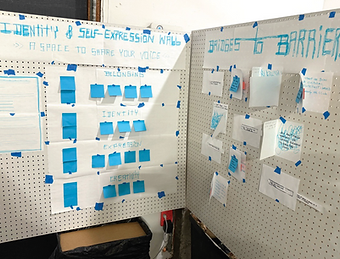
Testing & Refinement
This stage emphasized usability, interaction, and accessibility. Early mockups and printed prototypes were tested to help evaluate how students would engage with the piece — opening the “barrier” boxes, reading the prompts, and contributing their reflections.
Through testing, small but crucial adjustments were made: improving box spacing for accessibility, refining typography for legibility, and reworking color contrasts to guide attention toward the interactive components.
Feedback from peers, mentors, and school administrators informed final refinements to ensure the installation was both functional and inviting.

Process Outcomes
The final stage integrated all visual, structural, and conceptual elements into a cohesive installation. The result — Our Voices, Our Space — stands as a participatory visual system where students engage in reflection, self-expression, and community dialogue.
The process demonstrated how research-driven design can go beyond aesthetics to create experiences that nurture empathy, inclusion, and collective identity within schools.
Ultimately, the project bridges theory and practice, showing how thoughtful design can serve as a tool for student voice and belonging.
Key Findings
From the research and case studies, several themes emerged that directly informed the design decisions for Our Voices, Our Space:
Student Voice Matters
Across all studies, students expressed the need for spaces where their voices are visible, validated, and acted upon. This inspired the interactive format of the wall and its emphasis on open reflection.
Belonging is Visual and Emotional
Visual cues — color, layout, and imagery — deeply influence how students perceive inclusion. This insight shaped the use of color psychology and clean, inviting composition.
Simple, Tactile Interactions Encourage Honesty
The physicality of writing, posting, or revealing a message helps students engage authentically. This inspired the use of tangible elements like pull-tabs and boxes.
Design as Dialogue:
Design as Dialogue:
Successful environments for wellbeing and belonging balance structure and openness.
This principle guided the modular wall system — structured enough to feel intentional, but flexible enough to evolve through student contributions.